
A good strategy is to start off with exact match keywords and then, when you identify which ones convert best, turn those into broad and phrase matches. This is what I generally do and it tends out to work out the best.
Exact, Phrase, and Broad Matches
Exact match keywords means that you place your keywords in brackets [] and only people searching for that exact term will see your ad. So, if your keyword is “blue cars” then your ad will show up only when people type in “blue cars” exactly and not “buy blue cars” or “used blue cars” or even “blue car”.
Phrase matches allow you to access a wider target market. These keywords are contained in quotations “” so, continuing with our same example, “blue cars” will show your ad whenever people type in searches such as “used blue cars”, “big blue car”, “sell blue cars”. On the other hand, your ad will not show up for a search such as “blue used cars”.
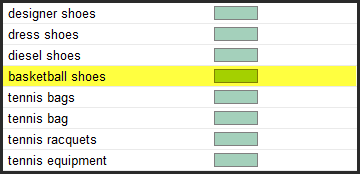
Broad match terms are those without delimiters so you would simply type your term in as blue cars. If you don’t add negative keywords your ad will show up for everything from blue cars photos to a blue sedan type car that looks cool.
The Reasons Behind It
The reason you want to bid on phrase and exact match, as well as broad, is that you will gain a better understanding of the market and you will often have a higher CTR with a lower bid price. So, you should start with up to 10 exact match keywords. Some of these will generate traffic and convert while others won’t. By using exact match you will discover this with the lowest amount of risk.
Once you establish exactly which keywords are generating qualified traffic, then you can turn those keywords into broad and phrase matches. This will allow Google to automatically find similar searches that match your keyword and show your ad to those users. This approach will afford you less control but your traffic will increase over time. However, before you turn-on broad match keywords for your campaign, make sure to include a list of negative keywords as well which will give you more control over who sees your ad and who doesn’t.